If you have a beech tree on your property, it might be time to take a closer look at its leaves. Beech leaf disease is spreading fast in Ontario, with long-term effects that can lead to canopy loss and eventual tree death.
This guide breaks down everything you need to know about beech leaf disease, from identification to prevention and treatment. Whether you’re a homeowner, property manager, or you simply care about local tree health, early detection and proactive care can make a real difference.
What does a beech tree look like?
American beech trees are native to Ontario’s forests and backyards. They are easily recognized by their smooth, gray bark and broad canopy. Their leaves are oval-shaped with wavy edges and visible parallel veins. In the spring, the trees are most often recognized for their long, thin buds.

What Is Beech Leaf Disease?
Beech leaf disease is a serious tree condition that affects both native and ornamental beech species. First detected in Ontario in 2017, the disease primarily affects woodlots, ravines, and residential trees. The disease is associated with an invasive, worm-like creature known as a nematode, which invades the leaf tissue and causes abnormal leaf development.
While the nematode is the primary culprit, environmental stress can make trees more susceptible to infection and accelerate disease progression. Stressors can include:
- Improper or aggressive pruning
- Drought
- Soil compaction
- Poor drainage
- Lawn care equipment damage
Urban trees are especially vulnerable due to the added pressures of road salt, pollution, and limited root space. Tree-to-tree transmission through root grafting or human impacts can also play a role in how quickly the disease spreads. Severely affected beech trees may die within 6 to 10 years of initial symptoms. Young trees are especially vulnerable, with high mortality rates in saplings, often killing new buds within a single season.
How to Identify Beech Leaf Disease
Early detection starts with knowing what to look for. Symptoms typically appear in spring and worsen throughout the summer months:
- Leaf crinkling or puckering.
- Premature leaf drop.
- Bud failure or stunted leaf growth.
- Thinning canopy over time.
The most telling symptom is the presence of dark stripes between the veins, visible from both the top and underside of the leaf.
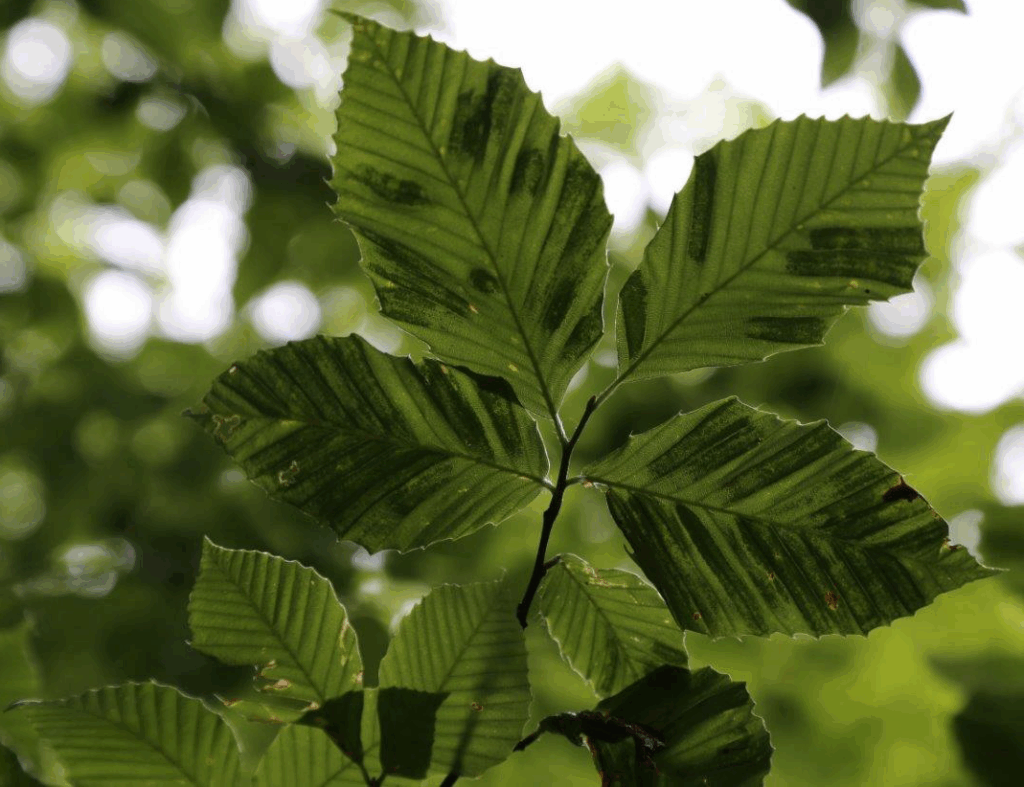
Surrounding tree species nested next to your beech tree won’t be affected in the same way, making accurate identification a key factor in early prevention. A certified arborist technician can assist with identifying potential beech leaf disease.
How Do You Get Rid of Beech Leaf Disease?
Unfortunately, you can’t eliminate the disease completely. With the assistance of a professional arborist, you can manage symptoms and prevent secondary issues like pest infestations or fungal infections.
Below are a few treatment options to consider for your beech trees:
- Mulching: Protects the root zone and retains moisture.
- Soil health management: Aeration and compost improve microbial activity.
- Targeted fertilization: Applying appropriate nutrients may strengthen a tree’s immune response.
- Selective pruning: Removing diseased branches may slow the spread.
- Routine inspections: Monitor leaf and bud development seasonally.
In cases of advanced decline or severe leaf disease symptoms, beech tree removal may be the safest option. This is especially important in areas where the tree poses a risk to structures or public safety.
What Ontario Homeowners Can Do
Beech leaf disease in Ontario is a growing concern but with the right approach, you can take action to help protect your trees.
- Know what to look for: Familiarize yourself with beech tree leaves and bark so you can spot changes early.
- Book regular inspections: Partner with a trusted tree care provider for seasonal check-ups and up-to-date guidance.
- Act early: Treating trees in the early stages of the disease offers the best chances for long-term survival.
- Stay informed: Since beech leaf disease is relatively new, research is ongoing and recommendations may evolve as we learn more. Be open to new treatments and updated advice – what worked in 2017, may not be best practice in 2025.
If you’re concerned about a beech tree on your property, don’t wait. Contact Advanced Tree Care today or explore our full range of tree services to learn how we can help protect your property’s natural beauty.